

Where Did All the Kansas Buffalo Go? The Disappearance That Changed the Prairie Forever
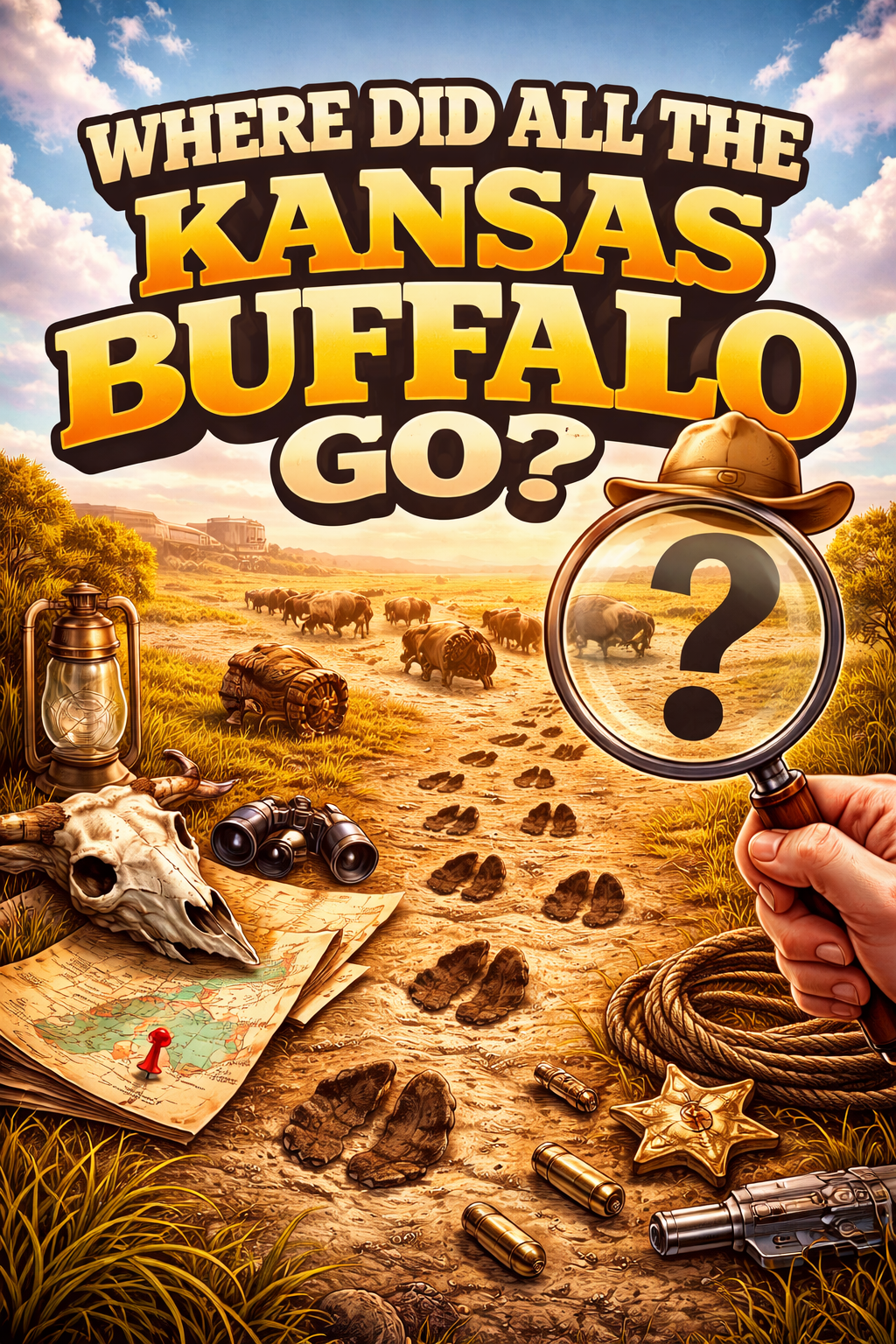
Friends and fellow Kansans, we might not see them anywhere these days… but did you know that there was a time when Kansas didn’t just have buffalo…
it was buffalo. Not a few. Not thousands… We’re talking millions of them.
They were everywhere, moving along like weather across the plains.
Thundering and shaking the ground with a force only reserved for a modern-day army. And they stretched as far as the eye could see.
And then… just like that, one day they were gone.
So just what the heck happened to our state animal that isn’t really there?
The Kansas That Once Was
Before major highways and small towns, and long before barbed wire cut the land into neat little squares, Kansas was wild in a way that’s hard to imagine today.
It wasn’t ruled by us humans. Rather it was home to the American bison; what most of us call buffalo. They were the rulers of our great state.
Some estimates (I have no idea how they could ever estimate this, but this is the number I found) suggest that 30 to 60 million bison once roamed North America, with a massive portion of them moving through Kansas. These animals weren’t just part of the ecosystem… no friends, they were the ecosystem.
They shaped the land. They fed the nation. They were a major part of our life.
Especially for Native American tribes across the plains. To these individuals, the buffalo meant everything: food, clothing, shelter, tools. And they did it right, because they wasted nothing.
And for thousands of years… it worked.
Then Came the Collapse
In the late 1800s, everything changed.
Fast.
The expansion of railroads made Kansas more accessible than it ever was before. And with it came hunters, yes hunters. Some of these men cam seeking profit, but others were encouraged by a much darker motive: to eliminate the buffalo and weaken the very Native American tribes who depended on them. Gross.
Just let that sink in. This wasn’t just overhunting. It was systematic extermination. Almost like a Wargame.
Professional hunters killed thousands of bison at a time. Trains would stop so passengers could shoot buffalo from the windows. Skulls were piled high. Hides were shipped east.
Within just a couple of decades… millions were gone. And by the 1880s, the great herds that once roamed freely, had collapsed.
Kansas went from thunder… to silence.
A Land Changed Forever
When the buffalo disappeared, it wasn’t just an animal that vanished.
It changed everything.
The prairie ecosystem shifted, and the Native American ways of life were devastated. Their peaceful way of living was replaced with the cattle ranching that we know today.
Kansas had become something new. Something more controlled.
More settled. More lost.
Are Buffalo Still in Kansas Today?
Here’s the part most people don’t realize… They’re actually not completely gone.
Today, small herds of bison still exist in Kansas, protected in places like state parks and private ranches. They’re no longer roaming free across the plains, but they’re still here, holding on, serving as a reminder.
A reminder and living piece of what Kansas used to be.
Why This Story Still Matters
Because this isn’t just about buffalo.
It’s about how quickly something massive… something that feels permanent… can disappear. But I also think it’s about Kansas.
And the wild roots that still live underneath everything we’ve built.
Because if you stand out on the prairie long enough…
if the wind hits just right… you can almost hear it.
The thunder.
And for a moment…
you’ll remember what once was.
-KWN8
If you are enjoying Kansas Weekly and the articles that help make this site amazing, and would like to make a small donation to help keep it flowing, just click here for our VENMO (this is Nate’s Venmo but goes to Kansas Weekly)
If you’d like to read more from our article catalogue, just click here!
If you’d like to read about the haunted bridge in Valley Center… click here!
Want to learn about the great Civil War battle that happened in Kansas… just click here!
